We are available during working hours on the following numbers:
A Continuous Emission Monitoring System (CEMS) is designed to measure and record real-time emissions from industrial stacks and flue gas outlets. These systems help industries comply with CPCB/PCB environmental norms by continuously tracking key pollutants such as SOx, NOx, CO, CO₂ and other critical emission parameters. CEMS ensures accurate monitoring, process optimization, and regulatory reporting through reliable sensors, advanced data acquisition systems, and long-term stable performance even in harsh industrial conditions.
The products covered under CEMS include a range of advanced gas monitoring solutions such as IN-SITU Type Flue Gas Analyzers for SOx, NOx, CO, and CO₂ measurement, high-precision IN-SITU Laser Gas Analyzers, dedicated CO Analyzers, and Extractive Type CEMS for detailed sample-based analysis. The portfolio also includes Hot Wet Extractive Systems designed for high-moisture flue gases, along with the IM–TPF 100 model for stable and continuous industrial emission monitoring.
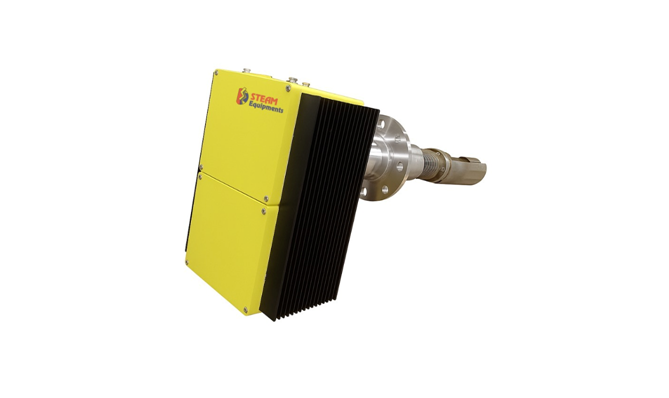
Model: UT-IN-S-N-O-H-230
SO2-NO2-CO2 measurement:
• This analyzer uses UV absorption (for SO₂ and NO₂) and IR spectroscopy (for CO₂) in a compact, robust sensing head with LED light sources and no moving parts, requiring virtually zero maintenance.
Accuracy is ensured through automatic zero calibration using ambient air, with CO₂ scrubbed by a long-life disposable filter (2+ years replacement interval).
• Service needs are minimal: 36V DC power (@50 VA) and RS485 digital output via a single 4-way sealed connector.
NO/H2O Measurement:
• The NO/H₂O sensor uses the same in-situ probe design as the SO₂/NO₂/CO₂ sensor but employs a Quantum Cascade Laser (QCL) as the radiation source. The QCL provides a narrow, precise IR beam, allowing measurement of a single NO absorption line free from H₂O interference for highly accurate, noise-free readings. It simultaneously measures H₂O concentration using a nearby spectral line.
• Unlike traditional chemiluminescence (maintenance-heavy) or IR/UV methods (cross-sensitivity and short lamp life issues), the QCL offers long-term stability, no moving parts, and virtually zero maintenance, with a lifetime measured in decades.
• The analyzer measures NO from <10 ppm to several thousand ppm at temperatures up to 450 °C and can be adapted for other gases (e.g., NH₃) by selecting a suitable QCL wavelength, making it ideal for applications like SCR control in coal-fired power plants.
• INSITU CEMS suitable for Refineries, power plant & other industries.
• Measurement gas resolution 1 PPM and accuracy +/-2% of reading
• UV absorption spectroscopy based SO2 & NO2 measurement, Laser (QCL) based NO & H2O measurement and Infrared spectroscopy-based CO2 measurement
• Remote monitoring of system available.
• Simple Installation as per the photograph
• Light weight so easy to installation.
• Low maintenance cost
• No Shelter required
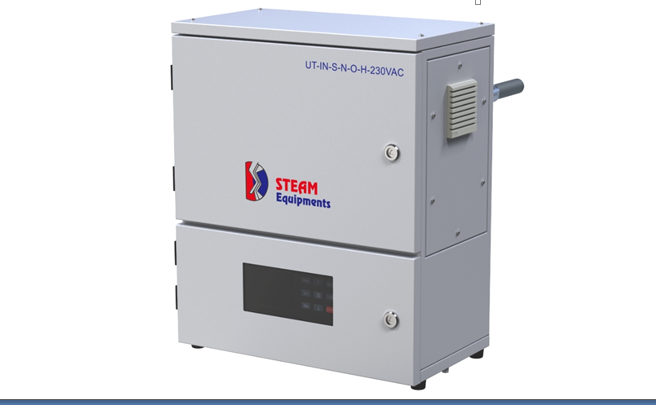
Model: UT-IN-S-N-O-H-230VAC
UT-IN series Flue Gas Analyzer is a highly integrated single-flange gas monitoring equipment, of which, core detection module adopts Tunable Diode Laser Absorption Spectroscopy (TDLAS), Differential Optical Absorption Spectroscopy (DOAS) gas absorption technology and Zirconia with independent intellectual property rights. The specially designed measuring cell effectively improves optical path length for gas absorption, which can measure trace gas accurately inside pipeline UT-IN series can be widely applied in online gas monitoring occasions including denitrification device, boiler flue and exhaust detection, etc. One equipment can realize online monitoring for multiple gas components, such as CO, CO2, SO2, NO, NO2, O2, H2O etc.
• Adopt single-flange design with high integration
• and easy installation
• Measurement gas resolution 1 PPM and accuracy +/-2% of fs
• Remote monitoring of system available.
• Simple Installation as per the photograph
• With high-temperature flowmeter, user can
• observe flow during equipment operation
• Low maintenance cost
• Sampling measurement is free from interference of pipeline deformation, high dust and other working condition change, with strong adaptability
• No Shelter required